
Contraceptives:
This section includes combined oestrogen progestrogen oral contraceptive and progestrogen only contraceptives.

Conbined Oral Contraceptives:
Oral Contraceptives containing an oestrogen and a progestrogen are the most effective preparations for general use.

The dosage regimen for combined oral contraceptives is usually 1 tablet daily for 21 days followed by a 7 days interval.
Dose of Conbined Oral Contraceptives:
1. Levonorgestel 0.15mg , Ethyl Estradiao 0.03mg per tablet.
28's tablet- 1 tablet daily for 21 days starting on 1st day on menstruation.
2. Norgestimate 0.25mg, Ethiyl estradiol 0.003mg per tablet.
21's tablet- 1 tablet daily for 21 days beginning on day 1 of menstrual cycle followed by a tablet interval
of 7 days.
Use: used as contraception & other menstrual problems.
Side Effect :
- Nausea
- Vomiting
- Changes in libido
- Depression
- Hypertension-Impairment of liver function
- Benign hepatic tumors
- Reduced menstrual loss
- Spotting in early cycles
- Amonorrhoea
Indication: Contraception( control menopausal & menstrual symptoms)
Cautions:
- Diabetes
- Hypertension
- Cardiac or renal diseases
- Migraine
- Depression
- Asthama
- Uterine fibromyomatar
- Lactation
- Risk of arterial thrombosis associated with oral contraception is increased with age and aggraveted by smoking and obesity.
Progestogen Only Contraceptives:
When oestrogens are contra-indicated progestogen only preparations may offer a suitable alternative but have a higher failure rate them combined preparations. Oral preparations are start on the 1st day of the cycle and taken every day.

How it Work
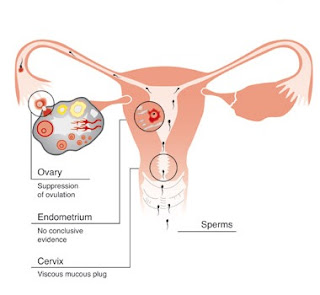
Dose:
1. Allyoestrenal 5mg per tablet.
Continue until at least 1 month after the end of critical period.
Premature lobour , according to individual up to 40mg per tablet daily have been used.
Indication: Threatened or habitual abortion, failure on nidation where due to lack of progesterone threatened pre-mature labour.
This section includes combined oestrogen progestrogen oral contraceptive and progestrogen only contraceptives.
Conbined Oral Contraceptives:
The dosage regimen for combined oral contraceptives is usually 1 tablet daily for 21 days followed by a 7 days interval.
Dose of Conbined Oral Contraceptives:
1. Levonorgestel 0.15mg , Ethyl Estradiao 0.03mg per tablet.
28's tablet- 1 tablet daily for 21 days starting on 1st day on menstruation.
2. Norgestimate 0.25mg, Ethiyl estradiol 0.003mg per tablet.
21's tablet- 1 tablet daily for 21 days beginning on day 1 of menstrual cycle followed by a tablet interval
of 7 days.
Use: used as contraception & other menstrual problems.
Side Effect :
- Nausea
- Vomiting
- Headache
- Breast tenderness
- Change body weight- Changes in libido
- Depression
- Hypertension-Impairment of liver function
- Benign hepatic tumors
- Reduced menstrual loss
- Spotting in early cycles
- Amonorrhoea
Indication: Contraception( control menopausal & menstrual symptoms)
Cautions:
- Diabetes
- Hypertension
- Cardiac or renal diseases
- Migraine
- Depression
- Asthama
- Uterine fibromyomatar
- Lactation
- Risk of arterial thrombosis associated with oral contraception is increased with age and aggraveted by smoking and obesity.
Progestogen Only Contraceptives:
When oestrogens are contra-indicated progestogen only preparations may offer a suitable alternative but have a higher failure rate them combined preparations. Oral preparations are start on the 1st day of the cycle and taken every day.
How it Work

Dose:
1. Allyoestrenal 5mg per tablet.
Continue until at least 1 month after the end of critical period.
Premature lobour , according to individual up to 40mg per tablet daily have been used.
Indication: Threatened or habitual abortion, failure on nidation where due to lack of progesterone threatened pre-mature labour.


